← SÃO PEDRO & SÃO PAULO EXPEDITION · 360°
Home Production 360° Video Making Of The Ship Gallery
PT | EN
Watch now
Logos of the project producers and supporters
Science on the archipelago

A research station in the middle of the Atlantic

Almost 1,100 km from the Brazilian coast, in the middle of the Atlantic Ocean, the São Pedro and São Paulo Archipelago (Saint Peter and Saint Paul Archipelago) is home to one of the country's most fascinating outposts. Since 1998, the Science Station has maintained an uninterrupted human presence on this isolated outcrop. It's a rustic facility with room for just four researchers at a time, operated with essential logistical support from the Brazilian Navy.

In continuous shifts of 15 to 30 days, scientists from various fields face conditions of absolute isolation to study an incomparable ecosystem. With no sources of fresh water or land vegetation, surrounded by ocean depths exceeding 3,600 meters and exposed to constant wind and waves, these researchers conduct vital studies in marine biology, the ecology of endemic species, meteorology and biotechnology.

More than a unique natural laboratory, whose rocks rose from the Earth's own mantle, maintaining this science station is a decisive geopolitical pillar: it is the presence of these researchers that secures Brazil's sovereign rights over an Exclusive Economic Zone of roughly 450,000 square kilometers around the islands, forming an invaluable strategic asset of our Blue Amazon.

Throughout our 360° expedition, we experienced firsthand the inspiring routine of those who dedicate stretches of their lives to this outcrop. We captured the behind-the-scenes of the fieldwork, life in close quarters surrounded by sharks and seabirds, and the dedication of these scientists to science and national sovereignty.
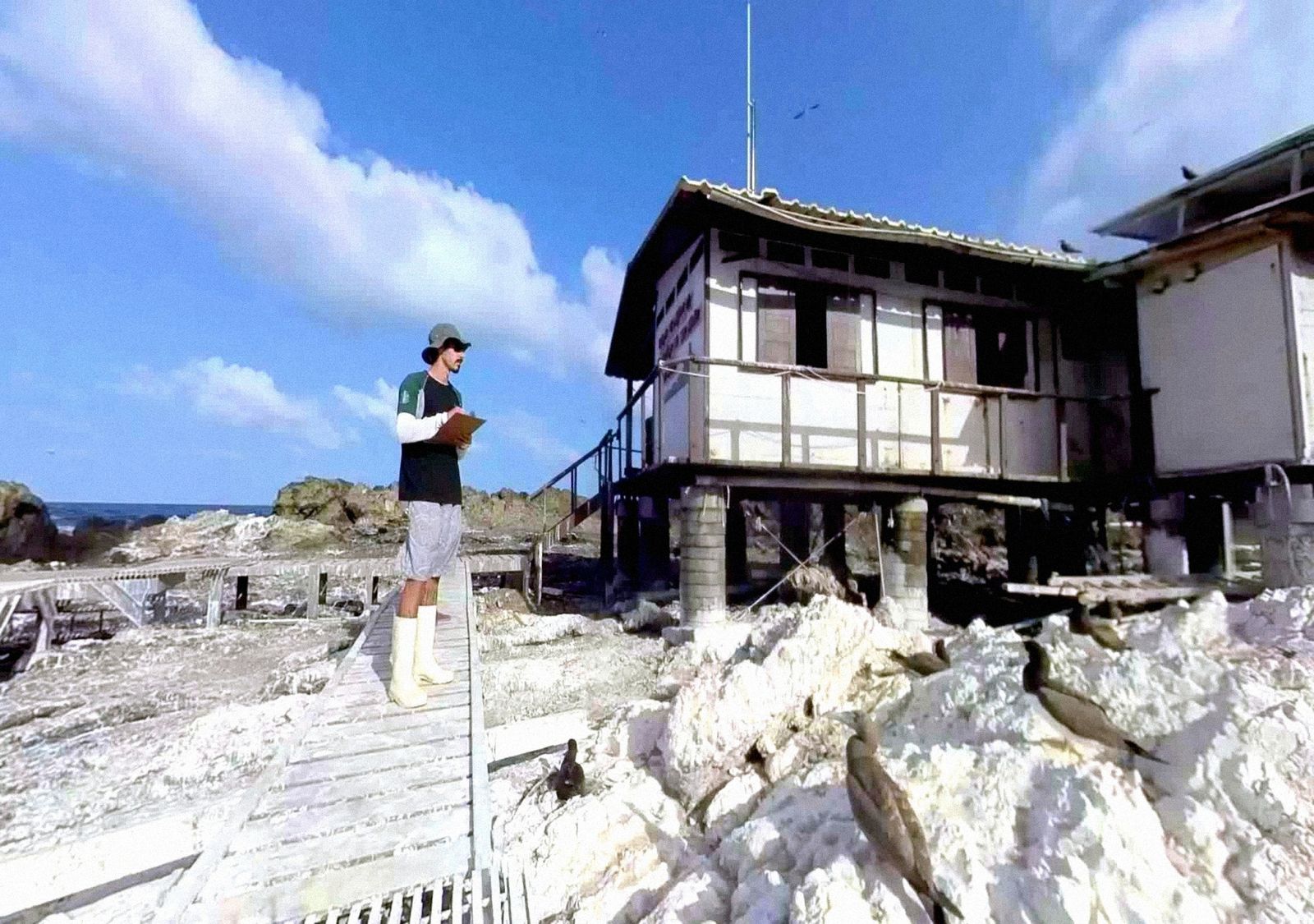
Researcher in front of the Scientific Station house, on the rocks
The station
A research outpost atop the archipelago

Built on the rocks, the station houses researchers during their field stints — usually in pairs, with room for up to 4 people at a time. It's from there that the daily expeditions set out for data collection, observation and monitoring of the archipelago.

Research institutions on the archipelago
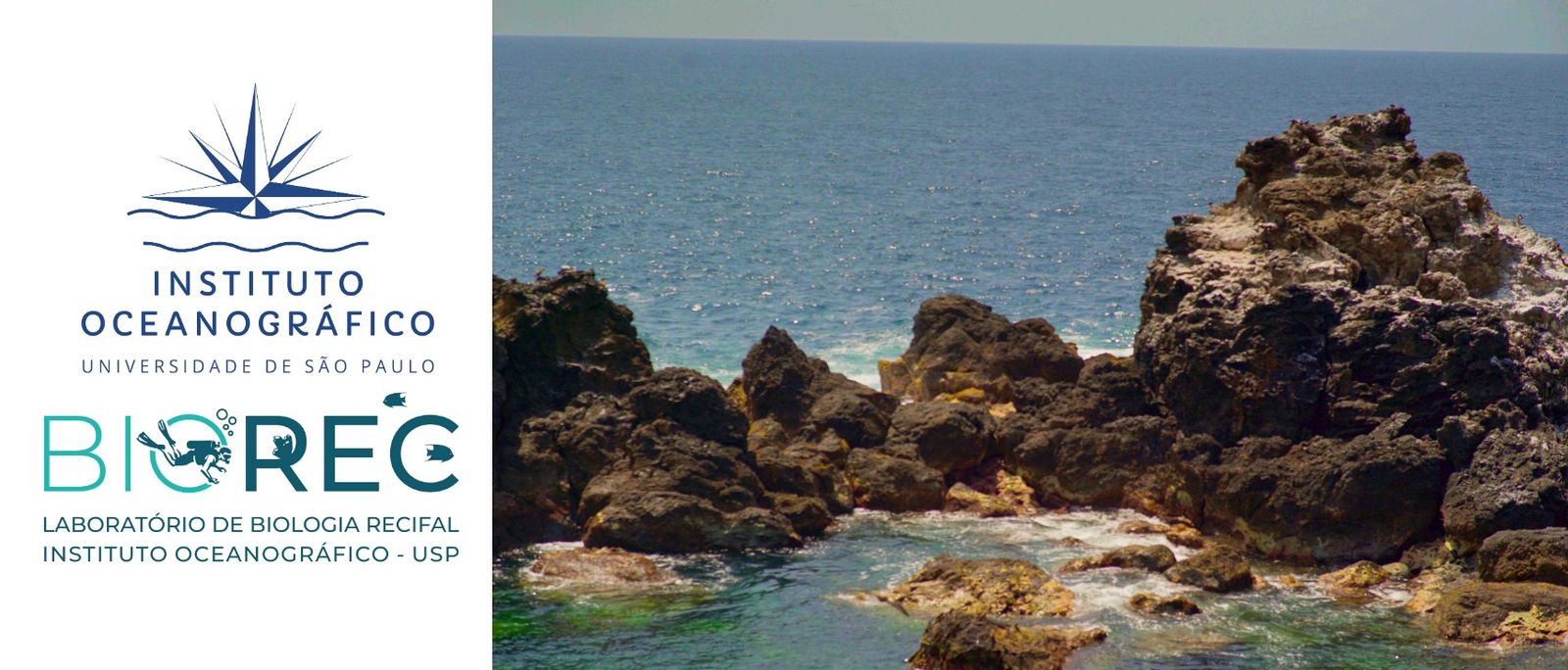
BioRec logo, from the USP Oceanographic Institute, and a rocky shore
Oceanographic Institute — University of São Paulo
BioRec — Reef Biology Laboratory

The Reef Biology Laboratory (BioRec) is coordinated by Prof. Tito Lotufo and is part of the Department of Biological Oceanography at the University of São Paulo's Oceanographic Institute (USP). BioRec focuses on the study of reef biota, covering assessments of biodiversity, ecology, biogeography and the evolution of marine organisms.

Among BioRec's projects, we highlight the study of cryptic biota — a group of organisms that live hidden within the reef, in crevices, burrowed into the substrate, or associated with larger organisms. This hidden component represents the majority of the reef's animal biodiversity and remains poorly studied. To study these organisms, several methods have been developed, one of the most widely used being "Autonomous Reef Monitoring Structures" (ARMS), artificial PVC structures that mimic the reef and attract these organisms. Since first using ARMS in 2007, we've carried out studies at sites such as French Frigate Shoals, Oregon, New Caledonia, Oman, Guam and Palau. In Brazil, we've used ARMS in coastal regions such as the Alcatrazes Archipelago (SP), Ilha das Palmas, Ilha das Cabras and the Recife de Fora Marine Park (BA). We've also used them on oceanic islands, such as Trindade Island and the Fernando de Noronha Archipelago, and finally at the São Pedro and São Paulo Archipelago (ASPSP).

We have studied ASPSP's biota since 2006, and we're part of the Long-Term Ecological Research Program for Oceanic Islands (PELD-ILOC), which monitors various aspects of these ecosystems.

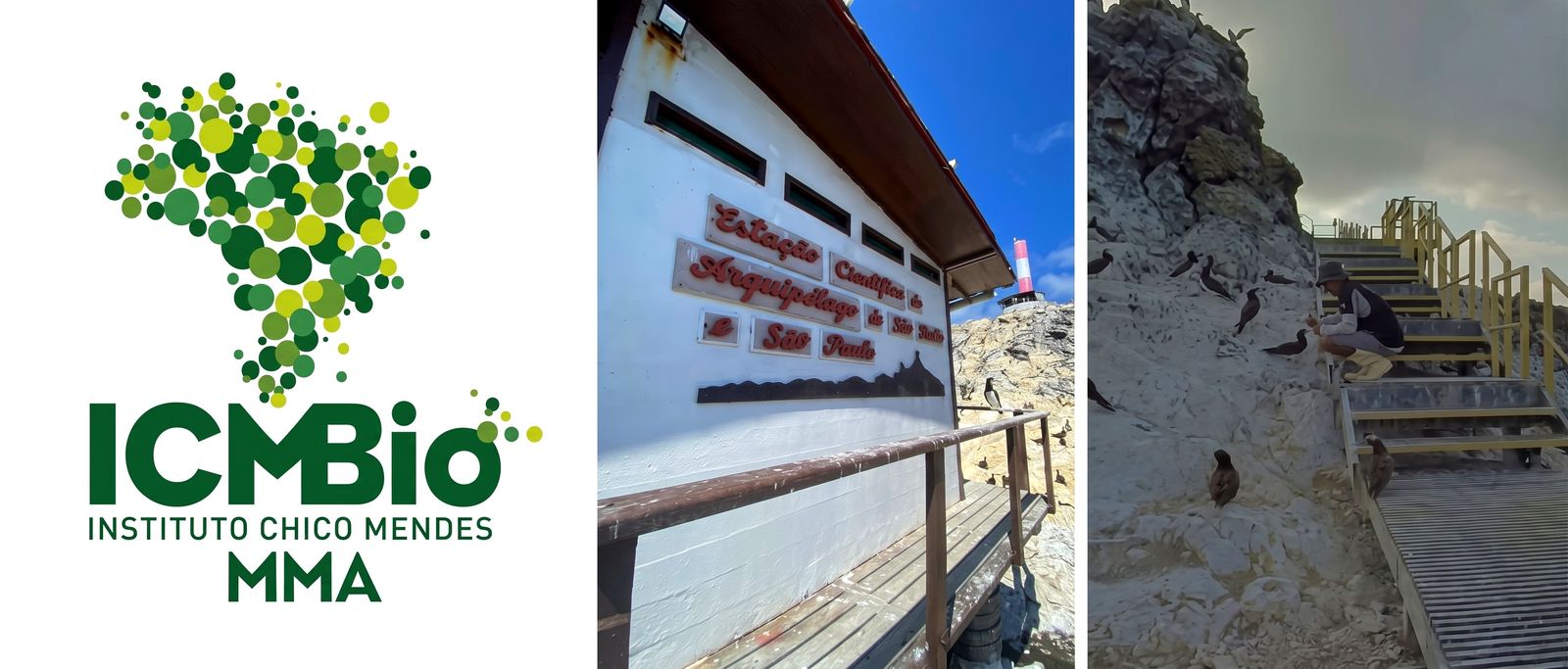
ICMBio logo and a view of the station on the rocks
Ministry of the Environment
ICMBio — Chico Mendes Institute for Biodiversity Conservation

As the agency responsible for the environmental management of federal Conservation Units, ICMBio is tasked with the environmental management of these Great Oceanic Units, in order to protect biodiversity and maintain or restore the economic and social benefits of human activity in the region. However, more than in any other marine protected area, joint work with and support from the Brazilian Navy across all of ICMBio's activities are absolutely essential for increasingly efficient management of these territories.

Through the Monitora Program (ICMBio), support for scientific research by various Brazilian academic institutions, and integration with the Pró-Arquipélago and Pró-Trindade programs, the archipelagos of the Great Oceanic Units have been studied on an ongoing basis, with data collected on fauna and flora biodiversity, animal behavior, and the monitoring and control of invasive exotic species.

Managing oceanic fisheries in these territories is one of our main activities, in support of the goal of protecting marine environments.

Visit the ICMBio website — Great Oceanic Units →
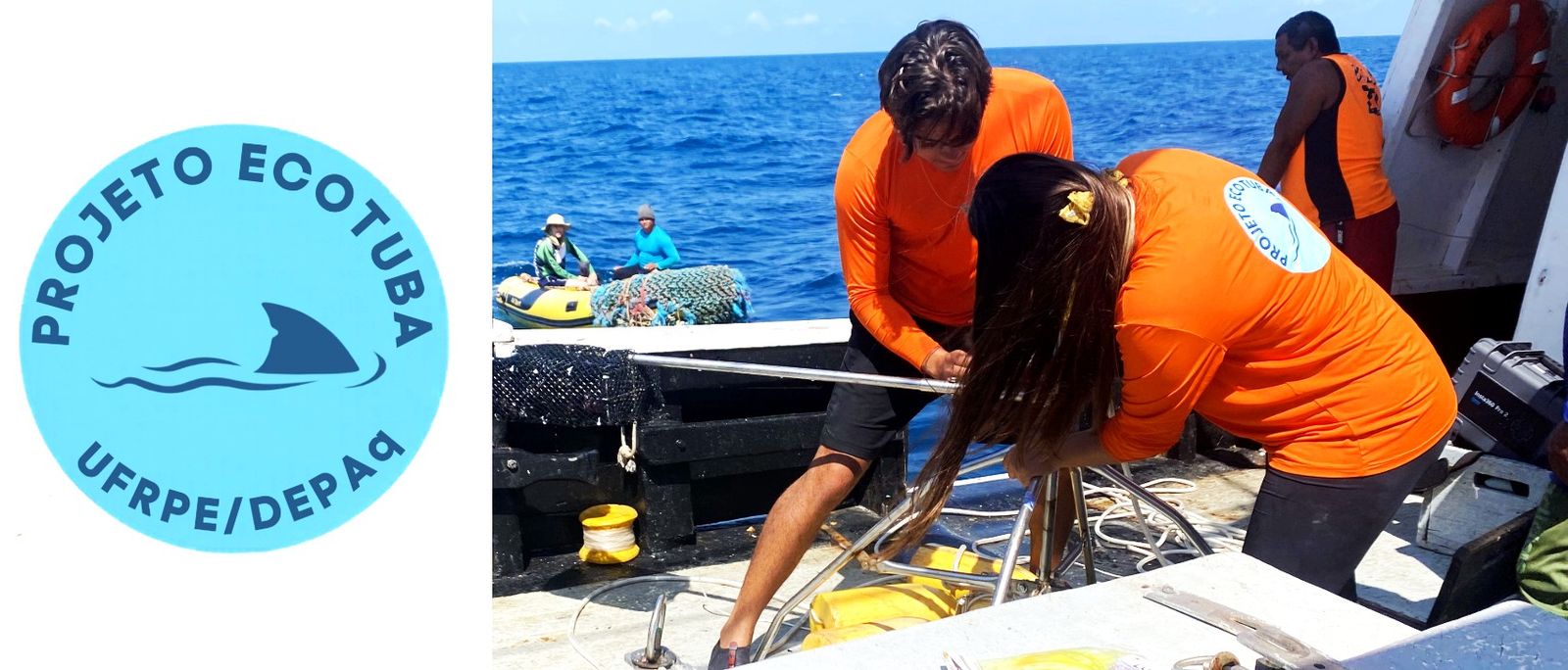
Ecotuba Project logo and team in orange shirts on deck
UFRPE / DEPAq
Project Ecotuba — Shark Monitoring

The São Pedro and São Paulo Archipelago occupies a strategic position in the South Atlantic, between South America and Africa and close to the Equator. Its unique location makes SPSP (São Pedro e São Paulo) a privileged point for investigating the movements of large marine predators and the connectivity between oceanic islands, Atlantic regions and hemispheres.

Shark monitoring at SPSP, carried out by ECOTUBA, uses acoustic telemetry to track the presence and movements of animals tagged with transmitters. Receivers installed on the seabed log the passage of these animals over time, making it possible to investigate residency and movement patterns. Integrating this information into the BRISCA Network (Brazilian Island and Coastal Areas Acoustic Telemetry Network) broadens this perspective, linking data from different coastal areas and oceanic islands and making it possible to identify movements between locations separated by hundreds or thousands of kilometers through the Ocean Tracking Network (OTN), a global monitoring network.

Keeping equipment permanently at sea at SPSP is a major scientific and logistical challenge. The archipelago is located almost 1,100 km from the Brazilian coast, in a remote region subject to particular oceanographic conditions. Installing, maintaining and retrieving the receivers depends on boats, specialized crews and suitable sea conditions.

The continuity of this work makes it possible to better understand how sharks use SPSP and how they move between different oceanic islands. This data is essential not only for the conservation of large predators and the planning of protected areas, but also for improving our understanding of the factors associated with shark presence in areas of human use. At SPSP, this information takes on added importance due to the island's isolation and the long distance to emergency and medical services. In the medium and long term, this knowledge could contribute to more effective monitoring, communication and management strategies, helping to mitigate the risk of incidents and promote a safer coexistence between human activity and marine wildlife.

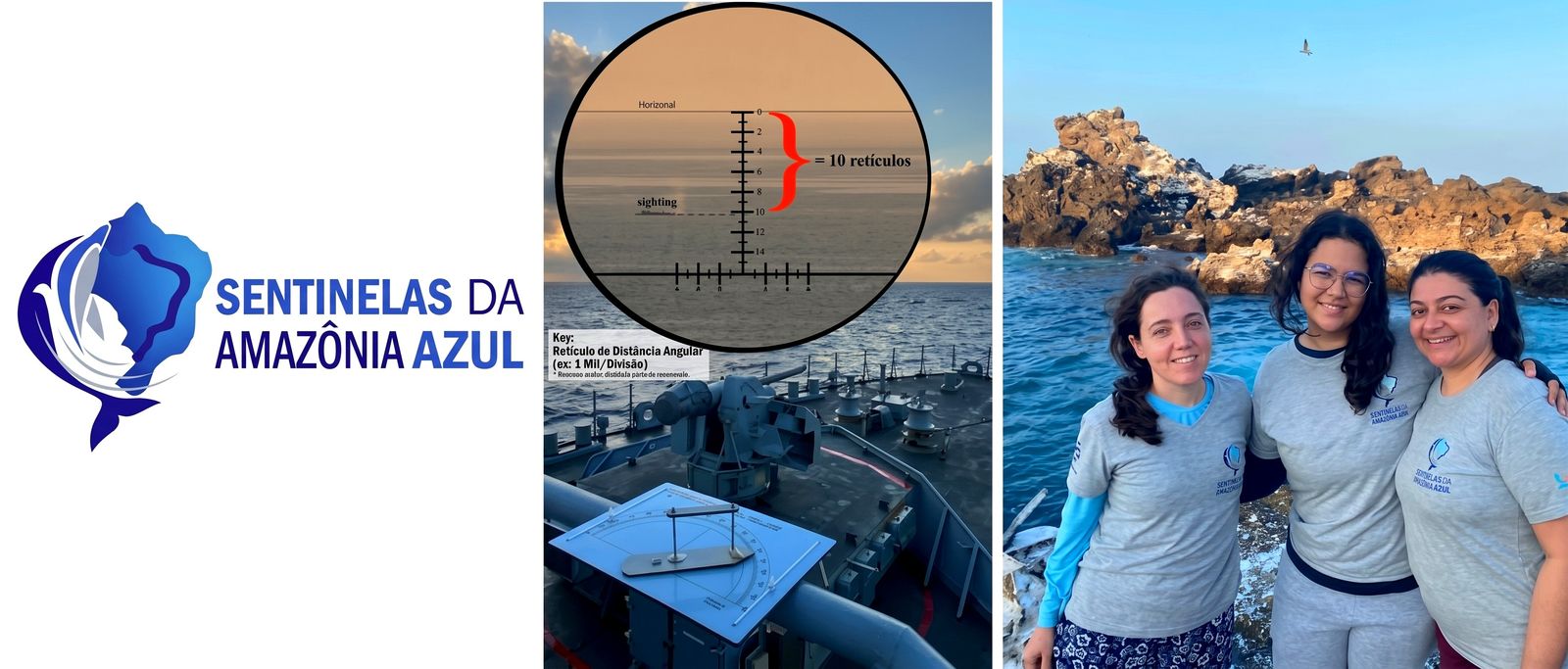
Sentinels of the Blue Amazon logo and three researchers
UFRN
Sentinels of the Blue Amazon

The Sentinels of the Blue Amazon project is a scientific research initiative of the Federal University of Rio Grande do Norte (UFRN) dedicated to monitoring and studying cetaceans (whales and dolphins) across Brazil's Exclusive Economic Zone.

The Sentinels of the Blue Amazon project studies the occurrence, distribution, species richness, behavior and acoustic communication patterns of cetaceans (dolphins and whales) across Brazil's entire marine territory. Since 2018, the project has maintained an important partnership with the Brazilian Navy, which provides berths on its ships for shipboard research.

Over these 8 years, the project has taken part in 17 expeditions, sailing through different regions of the Blue Amazon, from Amapá to Rio Grande do Sul. Among the most frequently traveled routes is the one between Natal and the São Pedro and São Paulo Archipelago (ASPSP).

So far we have covered 1,243 nautical miles and logged 1,382 hours of visual monitoring. All of this effort has resulted in 1,243 cetacean sightings, recording 22 species. Acoustic monitoring has also been an important tool for the project. In total, 1,625 hours of recordings were made, in which we logged more than 6,000 dolphin whistles, belonging to at least 6 different species.

Considering only the sightings made between Natal and ASPSP, there were 91 encounters with cetaceans, involving 11 species. On this route, the most frequently recorded species are the common bottlenose dolphin (Tursiops truncatus) and the humpback whale (Megaptera novaeangliae).

In terms of training, more than 50 people have been trained to carry out visual monitoring, and 15 people have received training in acoustic data analysis.

The work carried out by the Sentinels of the Blue Amazon project helps to expand knowledge of Brazilian marine biodiversity and to understand how different cetacean species use the Blue Amazon.

Instagram: @sentinelsoftheblueamazon →
Get in touch
amazoniaazul@release.com.br
Logos of the project producers and supporters
© 2026 São Pedro and São Paulo Expedition · Produced by Release · Supported by the Brazilian Navy
Project made possible through cultural incentive funding